Picking the Right Buggy for Desert Driving in Barsha Heights, Dubai
Choosing a buggy for desert driving is less about picking the loudest vehicle and more about matching the machine, the route and the rules to the day you have planned. The Arabian desert can be forgiving in the right conditions, but soft sand, heat and changing light make preparation matter. Start with the basics, then narrow the choice by how the drive will actually be used.
Start with the driver and passengers
Before looking at engine size or suspension, be clear about who will drive and who will ride along. A buggy that feels manageable for one person can feel very different with a full load, especially when climbing dunes or turning across slopes. Check whether each driver has the required driving license for the vehicle type and the area, and confirm that rule with whichever business is chosen.
Think about the passenger seat as more than an empty spot. Passengers need enough room to sit upright, hold on when the terrain changes and avoid loose items moving around. If children are part of the group, age, height and seating requirements should be checked before booking anything. A shorter route with fewer sharp turns is often a better choice than a powerful buggy used for a long, fast ride.
Decide what kind of driving you want
Desert driving has different rhythms. Some people want a steady route over firm tracks, while others want dune climbing and steeper descents. The right machine depends on that purpose. A lightly built recreational buggy may suit flat, open ground, but it can become tiring and harder to control in deep sand. A purpose-built dune buggy with strong suspension and a lower centre of gravity usually gives a more planted feel.
Be honest about experience. If the group has little time on sand, choose a vehicle that is easy to steer and does not demand constant throttle control. Sand rewards smooth inputs. Sudden acceleration, hard braking and sharp steering can dig wheels in or cause a stall. A calmer buggy gives the driver more time to read the surface and react.
Check the machine before committing
A visual check can reveal a lot without needing tools. Look at the tyres first. They should be suitable for sand, evenly worn and correctly inflated according to the vehicle information or the operator’s guidance. Damaged sidewalls, bulges or mismatched tyres are signs to raise before agreeing to a ride.
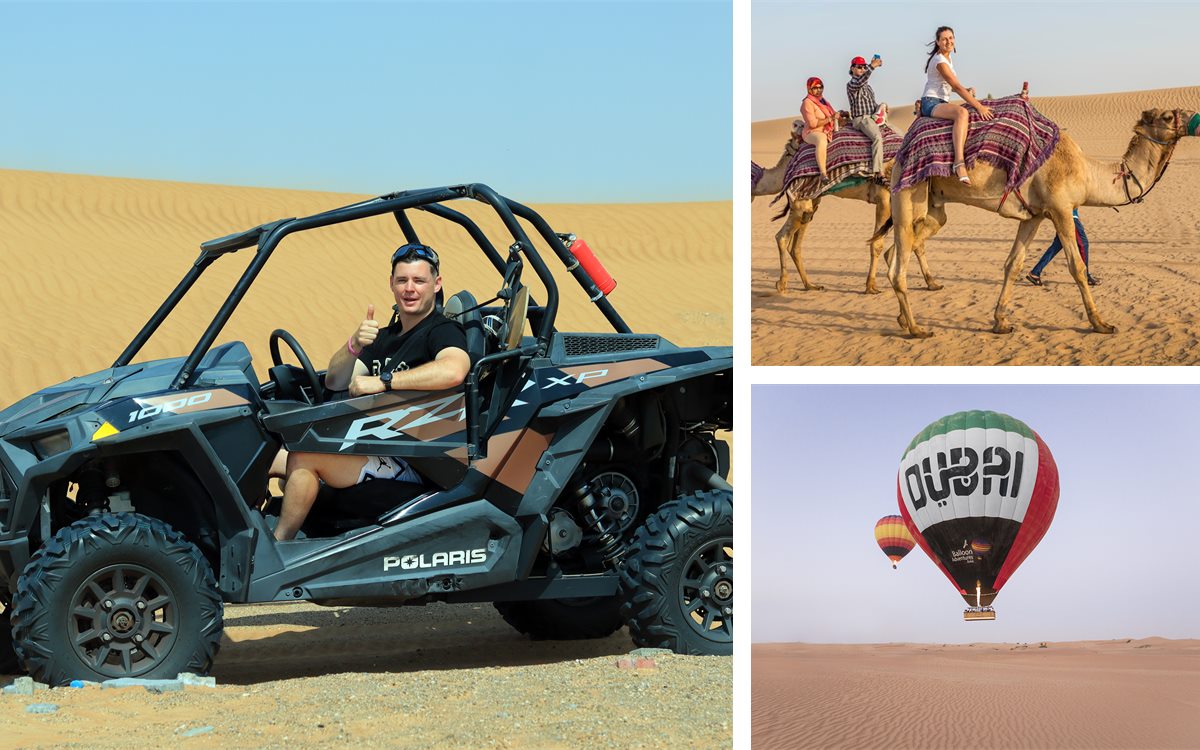
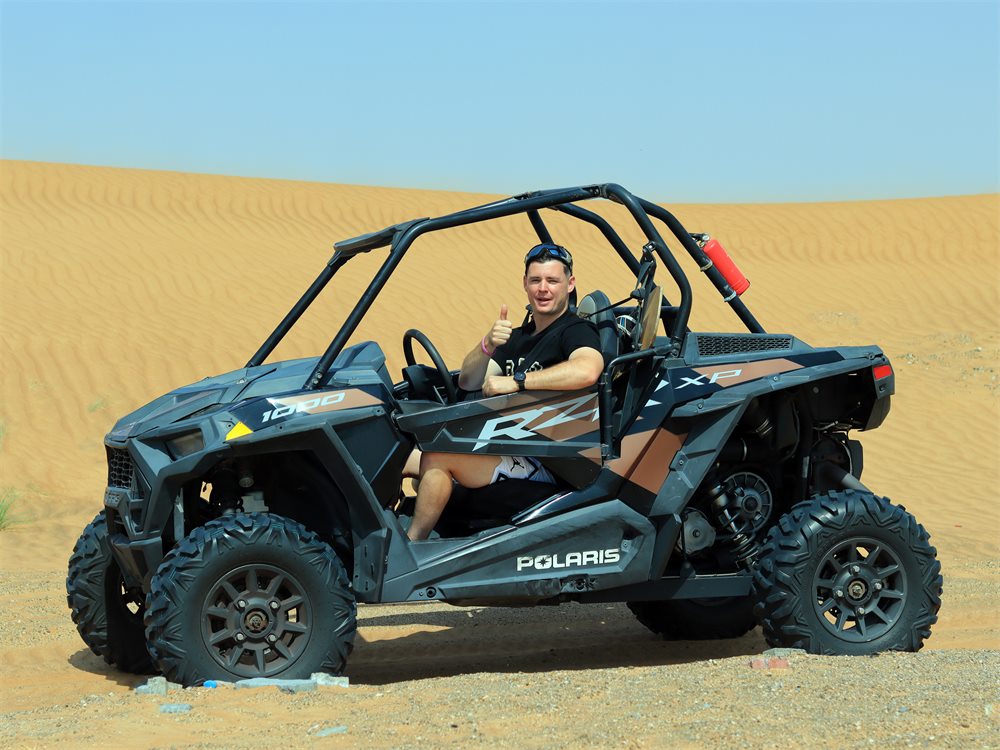
Next, look at the seats, harnesses and roll structure. Straps should sit snugly and adjust properly, with no fraying or damaged buckles. The steering should feel secure, and pedals should respond cleanly. If anything feels loose, noisy or out of place, ask for it to be checked rather than assuming it is normal. Mechanical, electrical or safety repairs should be left to a qualified professional.
It is also sensible to ask about the emergency kit and communication radio carried on the route. These items do not make the drive faster, but they matter if a vehicle stops, a rider feels unwell or the group becomes separated. A clear plan for what happens if something goes wrong is as useful as the vehicle itself.
Match the route to the day
Route choice shapes the whole experience. In Barsha Heights, the desert outing may begin from an urban base, so travel time, heat and daylight all affect what feels comfortable. A short late afternoon route can be easier to enjoy than a long midday run, when glare and temperature make concentration harder. Confirm the timing and route details with whichever business is chosen, since those points can vary.
Ask how the route handles different skill levels. A good plan gives clear moments to stop, regroup and turn back if conditions change. It also avoids pushing drivers into terrain beyond their ability. Dune riding should never be treated as a test of nerve. If the sand is soft, the light is fading or a driver is tired, the sensible choice is to slow down or cut the route short.
When comparing options for buggy desert dubai, look beyond the vehicle name and pay attention to the full setup: route, supervision, safety equipment and clear instructions. Those details often affect the day more than a small difference in engine power.
Understand the rules before arrival
Desert areas can have local rules about where vehicles may go, when they may operate and what documents drivers need. These rules are not optional. They exist to protect riders, wildlife and the landscape. Ask which areas are permitted and whether there are restrictions on speed, camping, camping fires or stopping near sensitive ground.
Documentation is another point to settle early. Requirements can depend on vehicle type, route and operator policy. Confirm whether a driving license is needed, whether deposits or waivers apply and what the cancellation terms are. Doing this before the day avoids awkward decisions at the start point.
Clothing matters too. Lightweight, breathable layers, closed shoes, sunglasses and sun protection help riders stay comfortable. A scarf or face covering can keep sand away from the mouth and nose when the wind picks up. Avoid loose scarves or dangling accessories that could catch on controls. Bring water, but keep it secured so it does not roll around the vehicle.
Compare value, not just headline appeal
Two buggy outings may look similar at first glance but feel quite different in practice. One may include a shorter drive with more briefing and support. Another may cover more ground but demand more from the driver. Neither is automatically better. The right pick is the one that fits the group’s experience, comfort and time.
Ask what is included and what costs extra, without assuming any answer. Confirm details such as safety gear, route length, driving time, waiting time, refreshments and any optional activities such as sandboarding or a camel sighting. If a bedouin camp is part of the wider day, check how travel between the driving area and the camp is arranged.
Also ask about group size. A smaller group can make communication easier, while a larger group may feel lively but can create delays. If riders have mixed experience, check whether the route can be split by ability. A driver who feels pressured to keep up is more likely to make poor decisions.
Use a simple final check
Once the main choice is made, run through a short final check before the day. Confirm the meeting point, start time, driver requirements, what to wear and what to bring. Ask how late arrivals are handled and what happens if weather or sand conditions change. Clear answers at this stage are a good sign, while vague answers suggest the need for more questions.
On arrival, take a moment to listen to the briefing and repeat any hand signals or stopping rules. Keep the communication radio within reach if one is provided, and stay with the group rather than exploring alone. If a vehicle feels difficult to control, say so early. A calm stop is far better than trying to push through a problem on open sand.
Choosing a buggy desert dubai experience works best when the decision is made in order: driver, route, vehicle condition, rules and practical details. That approach keeps the focus on control and comfort, not just the look of the buggy. One local option is AL Jazeera Tours | Dune Buggy Ride & ATV Quad Bike Rental Dubai.
AL Jazeera Tours | Dune Buggy Ride & ATV Quad Bike Rental Dubai is located at Amiralty tower Floor 1 Office 103 - الثنيه الأولى - Barsha Heights - دبي - United Arab Emirates.